The Paradise (2026) Review

Three years after Dasara turned Nani into an unlikely action hero, he and director Srikanth Odela are back together, and the ambition on display this time is impossible to miss.
The Paradise wants to be a sweeping, socially conscious action epic, and for roughly half its runtime, it comes close to pulling that off.
If you’re tracking Nani’s filmography or want more Telugu cinema coverage, MP4Movie has you covered on both fronts.
Here’s how this one actually plays out.
The Setting and Setup
The Paradise is written and directed by Srikanth Odela, with Thota Srinivas and Vinay Sagar Jonnala credited on screenplay, and it marks Nani’s 33rd film as lead actor.
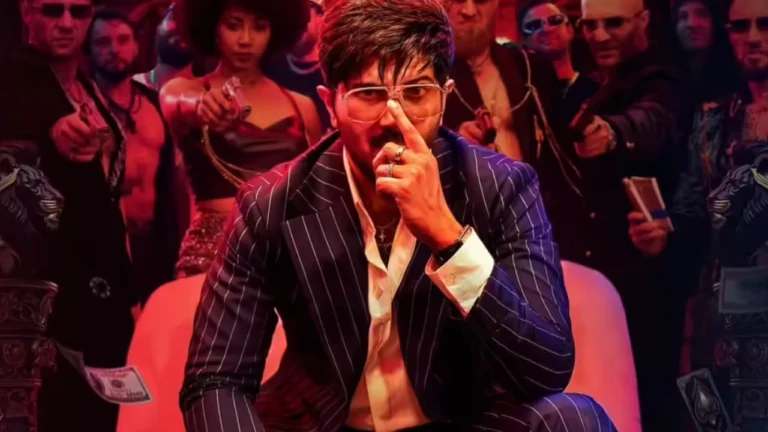
Set in 1980s Secunderabad, the story follows a marginalized tribal community called the Savari as they fight systemic discrimination and push for basic citizenship rights, with Nani playing Jadal, a member of the community who eventually rises into a leadership role in that struggle.
Mohan Babu plays Shikanja Maalik, the film’s central antagonist, with Raghav Juyal, making his Telugu debut, playing Vikram Maalik on the same side of the conflict.
Kayadu Lohar plays Subbulakshmi, the female lead, and Sonali Kulkarni plays Sammakka, with Sampoornesh Babu, Easwari Rao, Tanikella Bharani, and Priyadarshi Pulikonda rounding out a large supporting cast, the latter playing a political figure reportedly inspired by K. Chandrashekar Rao.
Odela reportedly spent around two years developing the screenplay, and Nani underwent a serious physical transformation to play Jadal, both signs of a production aiming well beyond a standard commercial action film.
What Works
The first half genuinely delivers.
Odela sets up the Savari community’s struggle with real specificity, grounding the politics of the story in period detail rather than treating 1980s Secunderabad as generic backdrop, and the early world-building carries the same confident hand that made Dasara work.
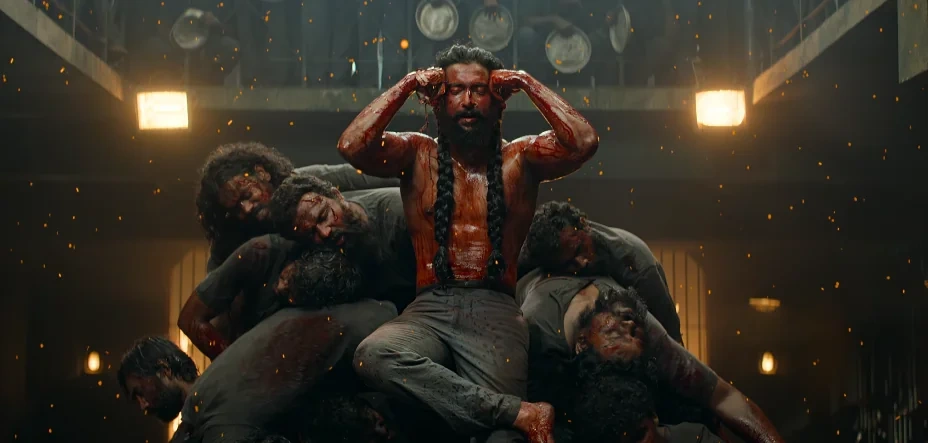
Nani commits fully to Jadal, and the physical transformation shows up on screen as more than just a marketing talking point, he moves and carries himself like someone the film actually built from the ground up rather than a star slotted into a role.
Mohan Babu brings genuine menace to Shikanja Maalik, and the visuals throughout, particularly in the period recreation and the large-scale confrontation sequences, hold up as some of the most ambitious work in recent Telugu cinema.
The music complements that ambition well, giving the film’s bigger emotional swings the weight they’re clearly reaching for.
Where It Falls Apart
The second half is where the film loses its grip.
What starts as a focused story about a community’s fight for dignity gradually tips into prolonged, punishing violence that overstays its purpose, and the screenplay struggles to balance its social commentary with the demands of a mass action spectacle, often serving neither particularly well.
Pacing becomes a real issue in the back half, with sequences that drag well past the point where they’ve made their point, and the editing has drawn sharp criticism for choices that disrupt the film’s momentum rather than sharpening it.
The political throughline, clearly meant to echo the real Telangana statehood struggle, gets muddled rather than clarified as the film escalates, leaving the ending feeling more exhausting than earned.
Several supporting characters, particularly on the female side of the cast, are underwritten relative to the weight the story wants their arcs to carry.
It’s an ambitious swing that connects only about half the time.
Music and Sound
The score is one of the film’s more consistent strengths, leaning into folk-inflected instrumentation that suits the story’s tribal and period setting far better than a generic action score would have.
It elevates the first half especially well, and even when the back half struggles narratively, the music keeps pushing for an emotional register the visuals alone don’t always reach.
Does It Come Together
The Paradise is a film of real ambition undone by its own excess.
It released worldwide on September 24, 2026, and drew mixed reviews, with critics and audiences largely agreeing on the same divide, a strong, purposeful first half against a bloated, punishing second one.
That split is the fairest way to sum up the experience.
There’s a genuinely good film in the first ninety minutes of this, one with something to say and the visual craft to say it well, but the back half’s excessive violence and pacing problems keep the whole from matching the sum of its stronger parts.
You can read more on the film’s production and the real history it draws from on its Wikipedia page.
Who Should Watch This
If you’re a Nani fan or you were won over by Dasara‘s mix of social grit and mass appeal, the first half alone justifies the watch, and his performance here is worth seeing regardless of how the rest lands.
If you’re sensitive to prolonged on-screen violence or need consistent pacing all the way through, temper your expectations heading into the second half.
FAQs
What is The Paradise about?
The Paradise follows the Savari, a marginalized tribal community in 1980s Secunderabad fighting systemic discrimination and seeking basic citizenship rights. Nani plays Jadal, a member of the community who eventually rises into a leadership role.
Who plays the lead role in The Paradise?
Nani plays the lead role of Jadal. The cast also includes Mohan Babu, Raghav Juyal, Kayadu Lohar, Sonali Kulkarni, Sampoornesh Babu, Easwari Rao, Tanikella Bharani and Priyadarshi Pulikonda.
Who directed The Paradise?
The Paradise was written and directed by Srikanth Odela, with Thota Srinivas and Vinay Sagar Jonnala credited on the screenplay.
When was The Paradise released?
The Paradise released worldwide on September 24, 2026.
Is The Paradise worth watching?
The film is worth considering if you’re a Nani fan or enjoyed Dasara’s combination of social themes and mass action. The first half is particularly strong, although the second half has pacing issues and prolonged violence.
What is the main criticism of The Paradise?
The biggest criticism is the imbalance between the two halves. The first half establishes the community’s struggle effectively, while the second half becomes increasingly violent, prolonged and less focused.